
Categories
Author Exhibition

“It really was an elaborate trip”: Earle Birney on work, writing, and the BC Southern Interior

By Karis Shearer & Paige Hohmann
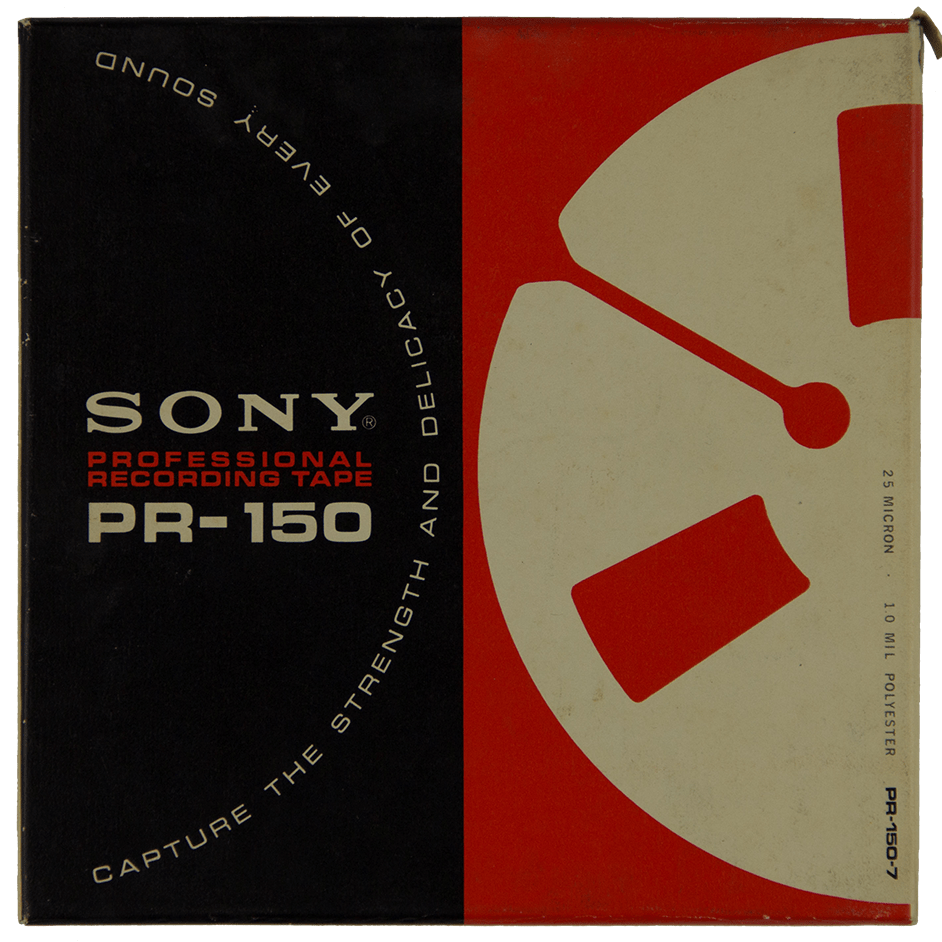
A reel-to-reel magnetic recording tape case. The left reads, "Sony. Professional recording tape, PR-150. Capture the strength and delicacy of every sound." The right features an outline of a reel-to-reel.

In the following exchange, UBC (Okanagan) SpokenWeb affiliates Karis Shearer and Paige Hohmann turn their attention to a clip from the SoundBox Collection and consider its connection to the B.C. Interior and the B.C. Regional Digitized History archive. This is part one of a series called “Archival Bonds” where researcher and archivist think together about the ways digitized collections can speak to each other.

Karis Shearer: I have always thought about the SoundBox Collection as representing Vancouver literary communities of the 1960s to 80s. However, as we process the collection as part of the SSHRC-funded SpokenWeb project, I’ve been surprised to see how many connections there are to the BC Interior. For example, in 1969, Frank Davey recorded interviews with writer and UBC English professor Earle Birney (one of the founders of UBC’s Creative Writing Department), for Davey’s 1971 book titled Earle Birney. In this short clip Birney tells Davey about “an elaborate trip” through the BC Southern Interior and the precarity of his employment after finishing high school.  It is also a literary trip insofar as it provides Birney the occasion to write his very first poems. His time in Vernon, in contrast, is decidedly uninspiring; while he attends social events and regular Sunday sermons at the Presbyterian church (Cameron 31-34), the struggle to make ends meet is very real.

Much of the infrastructure to which Birney refers either no longer exists or looks very different today and so turning to the British Columbia Regional Digitized History repository can enhance our understanding of the geography and transportation technologies that figure so prominently in this interview clip. Paige, how might we understand the relationship between BCRDH and the SoundBox Collection?

Paige Hohmann: To understand the interrelation between BCRDH and the Soundbox Collection, we have to start at the beginning. It’s rare that a single artifact reveals much by itself. An old photograph, letter, or sound recording taken alone is a pleasant decoration. A group of these same records, contextualized in certain ways, can be called an archive.

Departing from a tradition of administrative record keeping, archival theory supposes that evidence of activity is necessarily fragmented across many documents. When we reassemble the fragments, we can reconstruct an action, and gain a view into it. The relationships that allow the reconstruction is what Dr. Luciana Duranti has called the “archival bond” (1997).

While the functional details of this bond don’t always translate perfectly to non-business records, the notion of adjacent documentary traces shedding light on one another still seems to hold. These contexts and relationships and bonds abide, but digitization and its orderly continuation into online spaces lets us see – and hear – archives speak to one another.

***

Creston C.P.R. Station. n.d. Dow Family fonds.

Earle Birney: …But at any rate, I worked that summer [1920], and then the local Imperial Bank in Creston, the manager asked me if I’d like a job as a junior clerk. It was damn little money, but winter was coming on. There was no farm work in the winter. And I thought, “oh, I’ll take it to see what the hell it’s like.” He made [inaudible], and you know, reckless advancement. And what I got was fifteen dollars a week. [EB chuckles.] That’s what I started with, was fifteen dollars worth. I thought, “Jesus, that’s damn little!” After all, a suit of clothes would cost fifty dollars or something, and so on. Fifteen a week. And you had to have a suit of clothes and you had to have a… I couldn’t afford a regular white shirt because I couldn’t wash it myself.

[00:53:30] Frank Davey: You couldn’t wash it…

[00:53:31] Earle Birney: And so I wore a celluloid collar. I must be the last Canadian that wears celluloid collars! [EB laughs.] And I worked in this bank for about two months and then they suddenly moved me. They transported me to Vernon [in 1921] and this was kind of exciting in a way. Up to this time, you know I took the bank job… Well, I was going back home weekends.

[00:54:09] Frank Davey: You were still pretty close to home?

Citation: Birney, Earle. “BIRNEY Reminisces, Oct. 26, 1969” (clip). 2014.002.012. Frank Davey fonds. SoundBox Collection, AMP Lab at UBC Okanagan, Kelowna, B.C. https://soundbox.ok.ubc.ca/frank-davey-fonds/

[00:54:10] Earle Birney: Yeah. But now I got transported to Vernon and the way that transport was in those days [1921], it was a long way. You had to get on the train in Creston and go to Kootenay Lake forty miles down, and then take the paddle wheel steamer and down the lake to Nelson, and then a train to Penticton, and then another paddle wheel steamer up the lake to Okanagan Landing–bit like that. And then the train up to Vernon! It really was an elaborate trip and it took me nearly four days because we missed the boat at Penticton. The boat didn’t wait and the train was late coming–a couple hours late.

Train, cars and sternwheeler S.S. Sicamous at the Okanagan Landing dock. ca. 1915.

And I had to spend the weekend in Penticton. It was a great adventure for me. And as a matter of fact, the first poems I ever remember writing I wrote on that train going by seeing the Kootenay falls and what’s it called, [Blind?] Falls. [Blind Falls?] was long before they put a dam in. Beautiful falls. And the lake was marvelous. So [I] got up to Vernon and worked there, still for fifteen dollars a week! [EB chuckles.] I’d got a move but no promotion. [FD chuckles.] And there it began to be tough because I could not get board and room for under fifty-five.

[00:55:56] Frank Davey: Fifty-five dollars…?

[00:55:58] Earle Birney: A month. And I was getting fifteen a week, so I was only five bucks over for everything else–for clothes and so on. And so what I did was I managed to get board for forty-five without a room, and there was an empty room over the bank they let me have just to scrounge some blankets. And I saved that ten bucks by sleeping on the floor in there. And there was a wash basin place and a lavatory in the back of [the] bank. And I used that and that was how I solved the sleeping problem. And [I] ate around this boarding house. But it was still no good because I was getting old enough and I wanted to go to dances and you couldn’t afford to take a girl out to dance, you know? I wanted to dress better and all that. And so what little I saved from the cucumber picking I used up just trying to stay alive and properly clothed in Vernon! And after I’d used the money up I thought, “jeez, I better get out of here while I still can!” I had just enough left to get back home. And so I quit the bank. I wasn’t particularly good at it anyway, and there was no reason for promoting me. And I got back home and found my parents had sold the place and were going to go back to Banff. And so I decided that I would go back to the Rockies too because I was getting in a kind of sense kind of homesick, I guess. There were the other kids I went to school with there and stuff. And I thought maybe I could pick up a job there. So I went back to Banff and I did pick up a job on survey party. And we left Banff and went down to Waterton Lakes. You know that part?

Permissions

“Earle Birney Interview 1969” appears courtesy of Frank Davey.

Credits

Digitization by: Amy Thiessen (SpokenWeb RA) 2020/03/02

Transcription by: Megan Butchart (SpokenWeb RA) 2021/02/04

Bibliography

Cameron, Elspeth. Earle Birney: A Life. Viking, 1994.

Creston C.P.R. Station. n.d. Dow Family fonds. Item control no. 2014.33.24. Creston Museum, Creston, B.C., Canada. http://www.crestonmuseum.ca/ 30 March 2021. https://bcrdh.ca/islandora/object/creston:235

Davey, Frank. Earle Birney. Copp Clark, 1971.

Duranti, Luciana. “The Archival Bond.” Archives and Museum Informatics 11, no. 3 (1997): 213-218.

“Okanagan landing railway met with lake boats.” Photograph. Peachland Museum. BCRDH Link: https://bcrdh.ca/islandora/object/peach%3A1394?solr_nav%5Bid%5D=d9f62c6da173402d5a76&solr_nav%5Bpage%5D=0&solr_nav%5Boffset%5D=7

Train, cars and sternwheeler S.S. Sicamous at the Okanagan Landing dock. ca. 1915. Item control no. 302. Greater Vernon Museum and Archives Historical Photograph Collection. Greater Vernon Museum and Archives, Vernon, B.C., Canada. https://vernonmuseum.ca/  30 March 2021. https://bcrdh.ca/islandora/object/gvma:321.

“Train crossing wooden trestle on the K.V.R. route.” Photograph. Kettle River Museum. BCRDH Link: https://bcrdh.ca/islandora/object/kettleriver%3A51?solr_nav%5Bid%5D=dd59ea91f46b292d008c&solr_nav%5Bpage%5D=0&solr_nav%5Boffset%5D=8

SoundBox Collection, UBC Okanagan. Audio File Name: 2014.002.012_Birney_oct2669_interviewedbyFD_SideA_02.wav

Categories
Author Exhibition

“World word alive”: Fred Wah at Malaspina 

By Klara du Plessis 

Back of a Shamrock Recording Tape reel-to-reel box with “Wah Malaspina” handwritten in red ink. 2022.003.041. Fred Wah fonds. SoundBox Collection, AMP Lab at UBC Okanagan, Kelowna, B.C. https://soundbox.ok.ubc.ca/fred-wah/ 

On 3 February 1972 at 8pm, Fred Wah was recorded on ¼ inch magnetic tape reading at Malaspina College (now Vancouver Island University) in Nanaimo, B.C. The event was sponsored by the Canada Council for the Arts and formed part of a two-month series that included other poets such as Stan Persky and Robert Kroetsch. The reel-to-reel is part of the Fred Wah fonds in the SoundBox Collection at the University of British Columbia (Okanagan), donated by Wah himself, and has been digitized for purposes of preservation and access. This recording is available to be streamed below. 

When we listen to this recording, we hear Wah’s speaking and reading voice from 1972, but we also hear his poetry framed by the host, Morris Donaldson, within the broad category of an early career. While Wah is now celebrated as one of Canada’s most preeminent poets, this reading precedes his celebrity status, which arguably began with his reception of the Governor General’s Award for poetry for his collection Waiting for Saskatchewan (1985). Tellingly, the biographical note circulated at the event focuses less on awards and his major literary contributions—as it might do were one to introduce Wah to an audience today—and more on his affiliation with the west coast of Canada. It mentions UBC as his alma mater, his involvement with TISH, and his appointment at Selkirk College in the Kootenays. It describes his literary output as “map[ping], in poems, the geography of the land which has played such a prominent part in his life.” On the recording itself, the unnamed host emphasizes the regional in his work, insisting that “Fred’s poetry concerns a very specific place, the Kootenays” (00:02:33). 

Biographical notice introducing Wah at Malaspina College, printed on pink folio. Ephemera. 2022.003.041. Fred Wah fonds. SoundBox Collection, AMP Lab at UBC Okanagan, Kelowna, B.C. https://soundbox.ok.ubc.ca/fred-wah/

This biographical centering of place is apt in relation to the curation of Wah’s reading list. He reads almost exclusively from his first three poetry collections, Lardeau (1965), Mountain (1967), and Among (1972), the latter still forthcoming at the time of the event. (Open access PDFs of these collections are available courtesy of Fred Wah through the Fred Wah Digital Archive). Lardeau alludes to LardeauValley and the Lardeau River in B.C. In the poem “Lardeau / Summer 1964,” Wah writes and reads, “About the Lardeau? / There is little to say. / It is green, it rains / often, the mountains / are very beautiful[…] the rivers and creeks / flow south to the lakes” (Lardeau no pag. or 00:14:03). The lines are misleadingly simple, indicative of a clarity related to familiarity. He knows the place he describes and can celebrate its presence without reverting to lyrical excess. 

Wah’s closeness and commitment to place, to the Canadian west coast and B.C. interior, in particular, align with Pauline Butling’s theorization of a collective sensibility in the 1960s to write “place, landscape, the local, the city, the region, and the nation” (Writing In Our Time 89). As she elaborates, “‘here’ extends beyond geographic location; it includes the ‘linguistic landscape’ of the place and of the poem.” This perspective resonates throughout Wah’s work and throughout this recording as poems address mountains, valleys, waters, trees, and other forms of natural and geographic situatedness.  

Shifting from Lardeau to Among, Wah introduces the latter collection in relation to place and interconnection, suggesting that it foregrounds

a concern with being on the earth and the concern can be described or has been described as something physical. Yet that’s perhaps a little too easy since the demand that, as far as the activity of writing the poems is concerned, the demand of writing that metaphysics, the demand of being, say, a tree, has been a very serious one. (00:19:26) 

His engagement with his physical surroundings is one that he understands to be reciprocal. He is not only writing about the natural habitat but becoming one with it, through his body in communion with place, but also through his writing into being of that place. When introducing his reading of the poem “Hermes in the Trees” he questions, “How to be a tree [? How] to take very literally the act of giving the tree your value?” (00:25:21). By producing a poem on the subject of a tree, he writes the world into its own vitality through language. To cite the opening line of the poem, “World word alive” (Among 10 or 00:25:44)—three consecutive words or a world as alive as words. 

We can hear how coherently Wah has structured the curation of his reading around a thematic and conceptual concern with place. Then, towards the end of the recording, when the reading comes to an unexpected halt, Wah expands this consistent framing to embrace the more close-knit connectivity of interpersonal fellowship too. He states, “My writing is mostly in a world of, or is related immediately to a world of fellow writers, of fellows, companions, who share my concerns” (00:27:45). Here the “World word alive” is one interwoven with human presence in the shape of his writerly community. It is this community that is audible in the recording’s larger soundscape: the host’s initial commentary welcoming and situating Wah, the audience’s background voices and presence, the concentration and attention that formulates itself around the poetry reading itself, the sound of an unidentified technician recording the event…

Citation: Wah, Fred. “41. [Fred] Wah [Reading at] Malaspina [College]”, February 3, 1972. 2022.003.041. Fred Wah fonds. SoundBox Collection, AMP Lab at UBC Okanagan, Kelowna, B.C. https://soundbox.ok.ubc.ca/fred-wah/

Listening to Wah read more than fifty years after the fact, interconnectedness, presence, and community reverberates through time and space. Each of us listeners forms part of that community, even as we listen from very different historical moments and geographical locations, even as we are mediated by this very digitized audio file. The vitality of Wah’s voice in poetry lives on. 

Bibliography

Butling, Pauline and Susan Rudy. Writing In Our Time: Canada’s Radical Poetries in English (1957-2003). Wilfrid Laurier University Press, 2005. 

Fred Wah Digital Archive: https://fredwah.ca/ 

The SoundBox Collection. 2022.003.071. 41. Wah Malaspina_Side 1_1-4_(MA) from Fred Wah  fonds, nd. 2019.002.002, SoundBox Collection, AMP Lab at UBC Okanagan, Kelowna,  B.C.  

Wah, Fred. Lardeau. Island Press, 1965. 

—. Mountain. Audit / East West, 1967. 

—. Among. Coach House Press, 1972. 

Bio

Klara du Plessis is currently the SpokenWeb postdoctoral fellow at UBCO’s Faculty of Creative and Critical Studies, affiliated with Karis Shearer’s AMP Lab. She holds a PhD in English Literature from Concordia University and her research extends across sound, curatorial and archival studies, and research-creation. Klara’s research interests include curatorial structures in the event-formation, performance, and archiving of twentieth century and contemporary literature, and listening as critical method, and she is working on a monograph manuscript, provisionally titled Curatorial Listening. Reading the Relational Literary Event in Canadian Poetry, under contract with Wilfrid Laurier UP. Klara is also a published poet. Post-Mortem of the Event (Palimpsest Press, 2024) is one of her most recent titles. 

Categories
Event Recording Remediation

Hearing the Interior (2025)

Hearing the Interior with Fred Wah and Pauline Butling

As part of the SpokenWeb Symposium Re-Sounding Poetries: Collections Classrooms, Communities, Karis Shearer and Erin Scott co-curated an exhibition called “Hearing the Interior with Fred Wah and Pauline Butling,” which opened at the Alternator Centre for Contemporary Art and ran 11-19 May, 2025, alongside a second exhibition called “The SoundBox Collection: Creative-Critical Remediations.” The exhibition text is presented here:

“Poets, literary scholars, community organizers, and keen audience members have spent years recording the tender recollections, poetic compositions, and improvised words of some of Canadian literature’s biggest names at literary events across the country. At the same time, members of historic poetry movements, such as TISH, were also recording one another – in their living rooms, around the kitchen table, and at conferences. This exhibition focuses on Canadian poet Fred Wah and literary scholar Pauline Butling. Together, Butling and Wah – life partners — attended and organized myriad events throughout the 1960’s through 80’s and with Wah often recording these events using ever-evolving technologies, including his Wollensak tape recorder. With a revolutionary portable audio recorder and reel-to-reel magnetic tape, Wah was able to capture the vitality of the west coast of Canada’s literary scene and its many public reading events. Poetry readings, Butling tells us, “have often supported subversive, investigative, and community-building activities” (35). Their records, then, leave the traces of a collective body of work, the words of their peers, mentors, and one another shared and re-shared amongst eager listeners.

As part of the SpokenWeb Sound Institute Re-Sounding Poetries: Collections, Classrooms, Communities, held at the University of British Columbia, this exhibition explores the audio recordings created by Fred Wah that are housed in the SoundBox Collection. Many of these recordings echo the institute theme, with the collection holding the voices of the Vancouver and BC Southern Interior poetry scenes. Wah and Butling both felt that the power of these audio recordings lay in their communal design, in the power of people’s voices to open hearts to new poetries, and the immense value that teaching with such archival materials can bring to classrooms (oral history with Karis Shearer). With bibliographic support from the Fred Wah Digital Archive, and featuring audio clips from the SoundBox Collection, co-curators Dr. Karis Shearer and PhD student Erin Scott present a glimpse into the world of literary audio archives. Featuring works such as Evan Berg’s “Reel to Reel: a Meditation,” Miranda Eastwood’s “What’s In a Box?”, An Tran’s “Fred and Pauline,” Kailee Fawcett’s “Liminal,” Lauren Naidoo’s “Hyphenated Subject,” and Ronnie Cheng’s “In the Doorway,” Hearing the Interior explores the delight of what Wah calls “making inner/an outer world” (Wah 32). For the co-curators, this inner world is externalized as the richness of the Interior of British Columbia: the deep oranges, lake blues, mountains, the scree of the peregrine; but also, the students, artists, and scholars who are made up by and make up this region. Shearer and Scott welcome you into the world of Wah and Butling, and encourage you to pause and listen as they re-sound poetry across time, technologies, and communities.” 


Poetry reading at the Alternator Centre for Contemporary Art, 103-421 Cawston Ave, Kelowna, Syilx Territory, 16 May, 2026, 7-9pm. The exhibition opening featured an evening of readings by Sharon Thesen, Daphne Marlatt. While Fred Wah and Pauline Butling intended to participate, owing to circumstances, they were not able to attend. They were nevertheless made present by Erin Scott, Deanna Fong, and Klara du Plessis who read work by Wah and Butling, while Thesen and Marlatt also each read work by Wah during their sets. The poetry reading also marked the opening of on-campus exhibitions dedicated to Daphne Marlatt and Sharon Thesen’s recordings. We hear Erin Scott introduce “Hearing the Interior” exhibition and read a new piece of writing that situates the exhibition within the collectivity of the SpokenWeb Institute, and honours the many contributors whose labour may be less visible. In doing so, Scott’s piece calls back to Pauline Butling’s feminist ethos and critical writing about organizational labour. Klara and Karis introduce the “Remediating Daphne Marlatt” exhibition. Sarah Cipes and Slava Bart introduce “The Eros of Time,” an exhibition of Sharon Thesen’s sound recordings. The reading was hosted by Erin Scott and Karis Shearer.

Karis Shearer, Klara du Plessis, and Erin Scott during Re-Sounding Poetries: Collections, Classrooms, Communities
Sharon Thesen, Daphne Marlatt
Sharon Thesen
Deanna Fong
Daphne Marlatt
SpokenWeb students
Slava Bart & Sarah Cipes
Erin Scott
Karis Shearer & Erin Scott
Pauline & Fred (Augmented Reality work by student artist An Tran)

| Acknowledgements

We would like to thank the SpokenWeb Project, SSHRC, the Faculty of Creative & Critical Studies, the Reichwald Family, and the Alternator Centre for Contemporary Art for their support. Our heartfelt thanks to Inspired Word Cafe, the amazing folks who ran the refreshment table all evening, FCCS Technical Director Phillip Wyness, Media Manager Joanne Gervais, Comms Manager Shauna Oddleifson, Sam Neil, and Kaila Kalinocka for their exceptional work. To the entire SpokenWeb UBCO student team, we’re so grateful!

Categories
Event Remediation

Leaf Leaf/sounds))

Leaf Leaf/sounds))

Xiaoxuan Huang (~2021–2022), from Leaf Leaf/s by Daphne Marlatt (1969)

Leaf Leaf/sounds)) is a multi-track sound piece remixing a digitized 1969 reel-to-reel recording of Daphne Marlatt reading from her book, Leaf Leaf/s. Marlatt’s voice is re-sounded alongside ambient guitar drones and field recordings captured by the artist Xiaoxuan Huang between 2021-2022. What becomes hyper-visible are various tensions that arise out of the acts of re-sounding – references to specific dates emerge like history re-establishing itself in the contemporary moment; the interior space of Warren Tallman’s living room clash against footsteps walking over leaves, people swimming outdoors; and of course Marlatt’s voice is interrupted by, then talks over again, other vocalized sounds – coughs, laughs, sighs – captured by Huang’s field recordings. Following Linda Morra’s insightful unpacking of the term “moving” in the world of archives, this paper will also discuss how this act of re-sounding is entangled with the subjective editorial influence and orientations of the mover’s affects.

Categories
Podcast

S2, Episode 1: Sharon Thesen’s reading at the Bowerings’

July 15, 2024 | 43:28 | S2:E1

EPISODE NOTES

University of Exeter undergraduates Sofie Drew and Emily Chircop carry out a close listening of a 1980 recording of Sharon Thesen reading from her first book Artemis Hates Romance at George and Angela Bowerings' house. Drew and Chircop's conversation focuses on the intimacy, sociality, and ambiguity of the recording, and how this shapes interpretation. The episode features multiple archival clips from the digitized cassette tape, alongside interview audio from Karis Shearer and George Bowering. “Sharon Thesen's Reading at the Bowerings’” was co-produced by Emily Chircop and Sofie Drew as part of the Press Play project. The SoundBox Collection is part of the SpokenWeb SSHRC Partnership Grant.

Sofie Drew is a Classical Studies and English undergraduate student at the University of Exeter who is particularly interested in creative writing and poetry. She is the current Head of Poetry of the University of Exeter’s creative writing journal, ‘Enigma’, and was recently elected as Journal Director for the next year. Having written and directed an audio drama as part of the BBC New Creatives scheme, and written another audio drama as part of the “United Kingdoms” series which aired on BBC Radio 4, she is looking forward to working on further writing projects. Follow Sofie on Instagram: @sofiefdrew

Emily Chircop is an English and Communications undergraduate student at the University of Exeter, who has been working on podcasts since 2020. She is the co-founder of Archives Abound, an online student-run publication. Her main interests include early modern theatre and digital humanities, and she enjoys exploring texts by considering medium, performance, and representation of identities. Follow Emily on Instagram: @e.chircop

Karis Shearer is Associate Professor of English at UBC's Okanagan campus, specializing in literary audio, poetry, and archives. She is UBCO lead researcher on the SpokenWeb SSHRC Partnership Grant and co-produces the SoundBox Signals podcast series. She is a guest contributor to this episode.

George Bowering was born in Penticton, B.C. and grew up in Oliver. At UBC, Bowering was one of the founding editors of TISH. Bowering is a prolific poet, novelist, essayist, and critic, who has written over 80 books and 35 chapbooks to date. Some of his honours include the Governor General’s Award in both poetry (1969) and fiction (1980), and the Order of Canada (2002). Bowering lives in Vancouver.

Sharon Thesen was born in Tisdale, Saskatchewan. She spent spent most of her early years in Kamloops and Prince George, eventually moving to Vancouver to study and teach. In 2005 she joined UBC Okanagan where she is now Professor Emerita. Thesen is the author of 11 books of poetry including a number of chapbooks. Her books have been finalists for a number of prestigious awards including the Governor-General’s Award and the Dorothy Livesay Prize; her book of poems A Pair of Scissors won the Pat Lowther Memorial Award. She currently lives in Lake Country, BC.


These readings helped inform our research and/or may be of interest to listeners of this episode.

“Side A: Sharon Thesen's Reading at [George and Angela] Bowerings'” from Sharon Thesen fonds, nd. 2019.002.002, SoundBox Collection, AMP Lab at UBC Okanagan, Kelowna, B.C. https://soundbox.ok.ubc.ca/sharon-thesens-reading-at-bowerings/

Sharon Thesen’s “The Fire”: Studio Reading of “The Fire.” Ed. Amy Thiessen.
https://sharonthesenthefire.omeka.net/reading

Thesen, Sharon. Artemis Hates Romance. Toronto: Coach House Press, 1980.

Thesen, Sharon. Refabulations: Selected Longer Poems. Ed. Erin Moure. Talonbooks, 2023.
https://talonbooks.com/books/?refabulations

SpokenWeb Podcast Season 1 Episode 1 “Stories of Spoken Web”:
https://spokenweb.ca/podcast/episodes/stories-of-spokenweb/

SpokenWeb Podcast Season 1 Episode 2 “Sound Recordings Are Weird”: https://spokenweb.ca/podcast/episodes/sound-recordings-are-weird/

The Capilano Review, The Sharon Thesen Issue. Spring 2008.
https://thecapilanoreview.com/issues/spring-2008-the-sharon-these-issue/

Specifically, Thea Bowering’s article “Sharon Thesen: Poem in Memory, and growing up there”
https://journals.sfu.ca/capreview/index.php/capreview/article/view/2674/2674

SHOW CONTRIBUTORS
Emily Chircop
Sofie Drew
George Bowering
Karis Shearer
Sharon Thesen